Showing posts sorted by relevance for query olive. Sort by date Show all posts

How to choose the right olive oil - Types of Olive Oils


If one has knowledge about the various grades or types of olive oil, one can choose the right one according to their needs and partake of its health benefits and wholesome flavor. Here is a description of each type of olive oil with its benefits and drawbacks.


1. Extra-virgin olive oil

In order to make extra-virgin olive oil, a mechanical procedure is made use of to extract the juice of olives. First, by smashing the olives to a pulp, a mash is obtained. This mash is whirled around in order to enable the separation of the juice from the pulp and the stone. The pulp that gets separated is also known as the sub-product.

Extra-virgin olive oil is a completely natural product and forms an important part of the Mediterranean cuisine. This oil retains the organoleptic features of the olive fruit.

Remember

Extra-virgin olive oils can be categorized into various sub-types based on their flavor and acidity levels. When the olive oil has acidity lower than 0.8 degrees, it is considered to be of the best quality olive oil.

Advantages

1.  Completely natural product
2.  Less acidic; lower than 0.8 degrees. Lesser the acidity level, higher the quality of olive oil.

Drawbacks
Costly, although the quality is superior to all other olive oils. 


2. Virgin olive oil

The grade of olive oil that is just a notch lower than extra-virgin olive oil is virgin olive oil. This type of oil is obtained by cold pressing the olive fruit. Virgin olive oil tastes and smells fruitier and is lighter. There are various methods in which virgin olive oil is obtained. Thus, the oil generally has an acidity level lower than 2% and is considered a little defective.


3. Refined olive oil

Refined olive oil is not fit for human consumption and is produced by refining extra-virgin olive oil. During the chemical process that produces refined olive oil, the color, smell, and debris are removed. Its quality is good enough to be combined with extra-virgin olive oil to derive “pure” olive oil. Refined olive oil is not sold as edible oil but is used in industries such as pharmaceuticals, tinned food, and cosmetics.


4. Pure olive oil

Pure olive oil is obtained by combining extra-virgin olive oil and refined olive oil in a 25%:75% ratio. 

Advantages

1.  Pure olive oil has an intense flavor due to the presence of 20% extra-virgin olive oil that has acidity lower than 0.7 degrees
2.  Less expensive than extra-virgin olive oil


Disadvantages

1.  Not completely natural, although of good quality
2.  There is no fixed proportion for mixing extra-virgin oil and refined olive oil to make pure olive oil. Thus, certain brands of pure olive oil hardly contain significant amounts of extra-virgin olive oil, thus rendering it tasteless. This difference is reflected in the difference in price of the oil.


5. Pomace olive oil

Pomace olive oil is derived from the subproduct i.e. the pulp obtained after separation of olive juice from the mash. This oil is then refined to improve its quality. Finally, it is combined with extra-virgin olive oil in the ratio 95%:5%.


Advantages

1.  Less expensive as compared to extra-virgin olive oil or pure olive oil
2.  More conducive to good health as compared to vegetable oils like sunflower oil and soya oil

Disadvantages

Its benefits can be obtained only if the pomace oil is properly refined.


6. Salad olive oil

Salad olive oil is made by combining extra-virgin olive oil with any vegetable-based oil such as soya oil, sunflower oil, or mixed-seed oil in the ratio 15%:85%. Also known as “blended oil,” it is not allowed to be sold in countries which produce olive oil. However, in other countries, blended oil has proved to be quite popular.

Advantages

1.  Less expensive than other grades of olive oil
2.  More flavor if the extra-virgin olive oil used in the combination is strong

Disadvantages

Does not provide as many health benefits as other grades of olive oil since it has more of the properties of vegetable oil.
GOOGLE AD


8 Most Commonly Asked Questions about Olive Oil


1. Can other types of oil be used instead of extra-virgin olive oil?

Yes, other types of oil can be used. But, it is not advised to use them unless certain recipes require other oils, such as peanut oil or sesame oil. 

A good chef, experienced in Mediterranean cuisine, will recommend olive oil since it has the best taste and is generally fault-less. 

As it is rich in antioxidants and monounsaturated fats, it helps avoid heart diseases. Less expensive varieties of olive oil are also available for people who cannot afford the costly grades of oil.


2. What is the proper method of storage of olive oil? After opening, what is the shelf life of the oil?

Unlike wine, olive oil does not mature with age and thus, needs to be consumed quickly. It spoils easily and is delicate oil; hence it has to be stored with care. Olive oil needs to be protected from air, light, and heat. 

It is best stored in a cool and dry place. Olive oil tends to become rancid quickly and the early stages of rancidity cannot be detected by smell. Store the oil in dark, glass containers or in stainless steel jars that will not react with it. Ensure that olive oil is not kept in vessels made of copper, plastic, or iron.


3. Is it true that all extra-virgin olive oils are almost similar?

This is an untrue assumption because the olive fruit used to extract the oil may be of three different categories – delicate, medium, or robust – which has an effect on the quality of the oil. Also, the label on the packaging could be misleading. Unless you apply your own tests, do not believe that the olive oil labeled “extra-virgin olive oil” is indeed, just that.

Lower-quality olive oils such as pomace olive oil or virgin olive oil may be incorrectly labeled as extra-virgin olive oil. In order to recognize extra-virgin olive oil, the following things should be in order – no spoilt smell or taste, and a balanced level of pungency.


4. Can extra-virgin olive oil be safely used for frying?


 1. The answer to this question depends on the food item that is being fried. Usually, extra-virgin olive oil can be safely used for frying. Lower-quality oils are generally treated with chemicals to remove impurities and ensure that the flavor remains neutral. However, the rich flavor of extra-virgin olive oil tends to complement the food item being cooked.

Ensure that the temperature of the oil remains between 360 degrees Fahrenheit to 365 degrees Fahrenheit. On no account should the temperature exceed 380 degrees Fahrenheit. In fact, used olive oil can be filtered and stored for frying another two or three times.

2. Extra-light olive oil is most suitable for bakery products. We recommend Amanda’s olive oil tart crust. For most recipes, a cup of butter can be substituted with ¾ cup of olive oil.


7. Categories of olive oils

Olive oil can be divided into three slabs based on the flavor of the fruit being harvested: delicate, medium or robust. It is unfortunate that manufacturers fail to indicate which slab the product belongs to, especially in the wake of the fact that the intensity of the olive fruits changes every year. It would help if the labels declared the type of olive fruit used to manufacture the oil.

1. Delicate olive oil is extracted from arbequina, sevillano, leccino, and taggiasca types of fruit. It is best suited for light garnishing of food items such as fish.

2. Medium olive oil is extracted from mission, manzanillo, and ascolana types of fruit. It is suitable for grilled vegetables, salad dressings, and poultry.

3. Robust olive oil can be extracted from picholine, arbosana, and frantoio types of fruit. It is suitable for steak, in combination with lemon juice.


6. Why is there so much hype over unfiltered olive oil?

Unfiltered olive oil has a certain advantage over filtered olive oil, in that it contains more polyphenols or antioxidants, and keeps for longer. But, it looks cloudy. However, you can use whichever olive oil you prefer.


8. Are cooked olive oil and uncooked olive oil vastly different?

Uncooked olive oil has purer and richer taste and is better for your health than cooked olive oil. When the cooking begins, at the smoking stage, olive oil begins to eat itself up by burning. It is recommended that only the necessary amount of oil be used for cooking, and the rest be poured over the food directly, as garnishing, from the packaged container.
GOOGLE AD


Is Olive oil good for health? Olive oil - Disadvantages & Side effects.


The innumerable health benefits of olive oil are promoted widely. However, this nutritious food can also damage your health. Incorrect usage of olive oil can heighten the risk of developing cancer and certain degenerative disorders.


Olive oil disadvantages

One must be educated about the proper use of olive oil in order to obtain its health benefits and avoid the dangerous side effects.


1. Blood clotting

The clotting of blood is caused by an increase in its stickiness, caused by clumping together of blood platelets. This rise in stickiness can be induced by saturated as well as unsaturated fatty acids, except for omega-3-fatty acids that are found in flax seeds and medium-chain fatty acids obtained from coconut oil. 

A monounsaturated fatty acid called oleic fatty acid is found in olive oil, which encourages the clotting of blood. However, its negative effect is counterbalanced by the presence of other anti-inflammatory substances in olive oil, such as omega-3, oleocanthal, and hyddroxytyrosol. Even so, these benefits can be obtained only from extra virgin olive oil.


2. Dense with Calories

Excessive consumption of olive oil can lead to a tendency to gain weight since it is, after all, a fat. One should not take in more than two tablespoons of olive oil per day.

Olive is also extremely rich in calories, to the tune of 120 calories per tablespoon. Thus, one should have olive oil in regulated amounts if one wants to keep a check on the number of calories one is consuming.

Certain brands of olive oil are packaged in non-reactive plastic containers. However, the use of tinted containers is recommended.


3. Olive oil reacts with free radicals

The chemical composition of olive oil consists majorly of monounsaturated fat, which includes a double bond that can be easily broken, between two carbon atoms. Thus, olive oil is susceptible to reacting with free radicals and undergoing oxidation when it comes in contact with other chemicals. This, in turn, leads to the production of hydrogenated oil or can even cause the formation of trans-fatty acids.

It implies that olive oil, especially extra-virgin olive oil, should never be heated due to its unusual instability, such as for cooking, sauteing, and frying. 


Remember  

1.  Olive oil should be used raw, without any sort of processing, in order to prevent its degeneration.

2.  Never increase the temperature beyond 350 degrees Fahrenheit when cooking with extra virgin oil. It is recommended that olive oil be used for cooking.

3.  Olive oil is not suitable for high heat procedures, such as deep frying, due to its tendency to break down easily. If heated at very high temperatures, it causes as much damage as any other cooking oil.

4.  The health benefits of olive oil are best reaped at lower temperatures. Thus, it can be safely used in salads and other such cold food.

5.  Olive oil is sensitive to heat as well as light, causing it to degrade and release harmful substances. Hence, it should be stored at room temperature.

6.  Just as olive oil cannot tolerate heat, it is not at its best in a chilled environment either. Thus, it should not be kept in the refrigerator. Cold temperature does not lead to the formation of dangerous substances. But, it does cause the oil to become cloudy, or even become solid and form crystals. This impacts the consistency and texture of the oil. Olive oil can be stored safely at room temperature for up to 2 years. Experts urge us to store it in a cool and dark place. The flavor of olive oil is best within the first two months of storage.

7.  At the local retail store, pick the brand of olive oil that comes packaged in a dark green, glass bottle or other material that prevents light from filtering in.


Recommended Intake and Usage

Several factors influence the daily intake of olive oil, including age, gender, and physical activity levels.

For women: They can safely have up to 5 teaspoons of olive oil every day.
For men: They can safely have up to 6 teaspoons of olive oil every day.

Extra-virgin olive oil is considered to be the best among the various grades of olive oil and is worth the extra cost. Olive oil is best consumed in its natural form and raw.

Although the drawbacks of consuming olive oil are lesser than its wide benefits, by no means are they insignificant. Thus, olive oil should be carefully handled for complete peace of mind.
GOOGLE AD


How to Identify Genuine Olive Oil - 7 Best Shopping & Storage Tips


Do you want to change your current cooking oil to olive oil? Read on to find out how you can choose the correct grade of olive oil to maintain good health. Despite the recent hype over olive oil, it is not a new product; it has been in use for centuries and its healing properties were well-known. 


Olive oil is also used for perform rituals and other holy purposes by certain religious sects. By replacing your present cooking medium with olive oil, you can visibly see a change in your well-being.


1. Cold-pressed

When you read the label of the olive oil brand, look for the phrase “cold-pressed.” This means that heat has not been used to extract the olive oil during crushing, thus avoiding the dangers of degradation of the oil into harmful constituents, and increase in impurities.


2. Heat or chemical free

The best and the cleanest way to obtain oil from olives is the mechanical method, without the use of heat or chemicals.


3. Flavor of the olive oil

It is a common mistake to think that green olive oils are better in terms of taste than yellow olive oils. In fact, the color of the olive oil has no bearing on its flavor or quality. The taste of the olive oil is the best indicator of its quality. Lightly-colored olive oil can be of superior quality as well.


4. Light or diet olive oil

There is no such as “light” or “diet” olive oil. Lightly-colored olive oil is not a low-calorie variant. Olive oils labeled “light” have most probably been treated with chemicals to suppress its smell and taste, and alter its acidity level and color.


5. Dark glass protects the olive oil

Olive oil that comes packaged in a clear container or a plastic bottle should not be purchased. Containers made of tin, ceramic, or dark glass protect the olive oil from light and prolong its shelf life, while retaining its quality.


6. Harvesting date

Discard olive oil that has been lying around for a year or so since it has reached the end of its shelf life. Ethical companies include the date of harvesting on the labels of their olive oils. Sometime, however, the date on the label does not indicate the harvesting date. Instead, it shows the date of bottling. It is useful to remember that the harvesting time for olives is between October (in warm places) and March (in cold places).


7. Color of the olive oil

The difference in the color of olive oil occurs due to the varying concentrations of chlorophyll present in the olive when they are harvested. Olive oil can be light straw, dark green, or yellow-gold in color. The color of the oil does not affect its quality. Instead, the procedures used to manufacture the oil and store it have the power to harm it.
GOOGLE AD


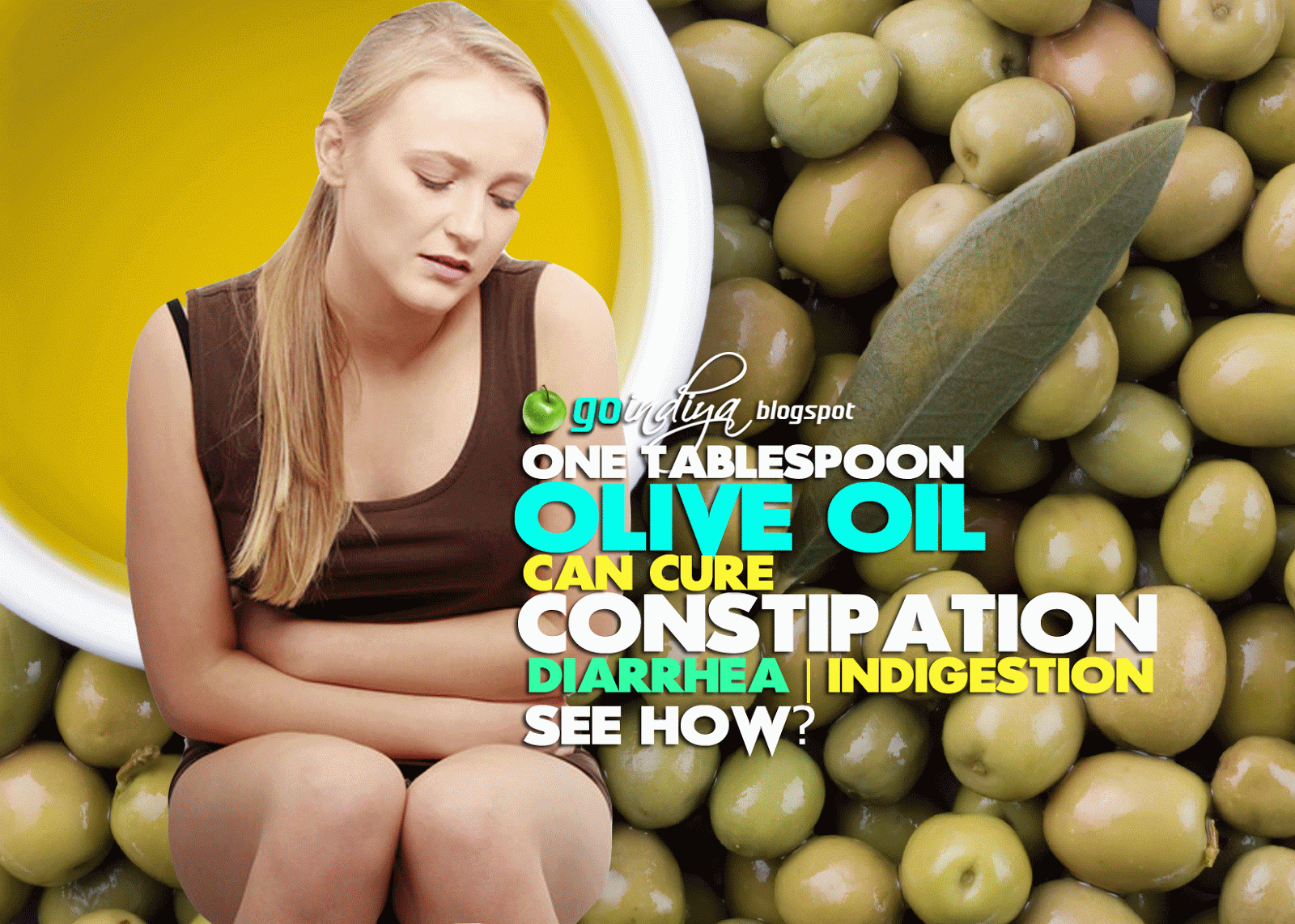
Olive Oil for Constipation & Indigestion. One Tablespoon Can Do Wonders.


Olive oil

Olive oil is known as much easier and natural solution for constipation in all age groups. Olive oil can be used as a safe and natural home remedy for alleviating constipation.   

Olive oil is very simple and easy home remedy for constipation. Add olive oil to your daily diet, as it can help to get your body and digestion system moving more efficiently. Olive oil also helps relieve gas and other digestive troubles.


Olive oil on empty stomach

Consume 1-2 teaspoon of extra virgin olive oil in the morning on an empty stomach. Do not drink water after consumption of olive oil at least for 1 hour. This helps to alleviate constipation.


Olive oil and Lemon juice

Consume 1 tablespoon of olive oil 2-3 times a day and also consume 1 tablespoon of fresh lemon juice after olive oil. For infant and kids feed ½ -1 teaspoon of olive oil and ½ -2 teaspoon of fresh lemon juice with 1 teaspoon of honey. This combination is very useful and tested for all age groups.


Olive oil with Orange juice

Add 2 tablespoon of olive oil or extra virgin olive oil in glass of fresh orange juice. Drink this juice in the morning, especially, on an empty stomach. For infant and small kids add ½ - 2 teaspoon of olive oil in ½ -2 cup of fresh orange juice. You can drink your favorite fruit juice instead of orange juice.


Olive oil with Curd/yogurt

Add 1-2 tablespoon of olive oil in cup of curd and consume in the morning or 3 times a day.


Olive oil with Banana

Make banana shake (1 glass) and add 1-2 tablespoon of olive oil to it, also add 1 tablespoon of honey in it, and consume it. Do this 2-3 times a day. Or spread 1-2 tablespoon of olive oil on your fruit salad or vegetable salad.


Olive oil & Pineapple 

Cut bowl of pineapple pieces and spread 1 tablespoon of extra virgin olive oil and half teaspoon of black pepper salt on it. Eat this to get rid of indigestion and constipation in few hours. You can eat one more bowl of above mixture.
GOOGLE ADS


18 Surprising Benefits of Olive oil for Skin Care - 2


10. Removes makeup

Olive oil is mild and does not sting when used around the eye area, unlike harsh cosmetic makeup removers. 

It is a good option for people with sensitive skin. To deal with the oily residue after applying olive oil, you can wash your face with a suitable face wash after removing makeup. This process will make sure that no residues of makeup remain on the skin.


11. home-made makeup cleanser

You can make a home-made makeup remover or makeup cleanser using olive oil and castor oil. Depending on the type of skin you have, you can decide the quantity of olive oil and castor oil required. If your skin is dry, take more olive oil than castor oil. However, if your skin is oily, take more castor oil and less olive oil.


12. Prevents premature ageing

Certain antioxidants present in olive oil, namely hydroxytyrosol and vitamin E forestall premature ageing since they prevent cell degeneration in the skin. Squalene, a substance present in olive oil, maintains the elasticity of the skin. Thus, the skin does not sag and develops a youthful glow, along with firmness.


13. Treat dry and scaly skin

A remedy that can be easily made at home in order to treat dry and scaly skin involves the use of olive oil. Make a mixture of olive oil and sea salt. Use this granular mixture on the affected area to remove dead skin cells and expose the healthy skin underneath. In your bath, add a few drops of lavender essential oil and a few tablespoons of olive oil. This home remedy is simple but luxurious and helps you relax while moisturizing and soothing your entire body.


14. Ideal sunscreen

Did you know that olive oil is a very good sunscreen as well? Make a mixture of olive oil and tea decoction, taken in equal proportions, and apply this mixture to your body and face. The tea decoction can be obtained by boiling tea in water and straining the liquid. Leave the mixture on your skin for 1 hour. After that, rinse the mixture off your skin but do not wash because it leaves a residue. This residue will act as a natural sunscreen.


15. Hydrated and glowing skin

In order to get a natural glow, your blood circulation should be good. By massaging your skin every week with olive oil, the blood circulation will be enhanced and your skin will look hydrated and youthful. 

Olive oil can also be used as a carrier for essential oils. Heat a mixture of olive oil and your preferred essential oil for a few seconds. 

Note: Make sure that the olive oil does not get burnt. 


17. Chapped lips

If you want to get rid of the problem of chapped lips, switch to olive oil instead of using your regular lip balm. Cooking in olive oil will help you gradually lose weight. You can get rid of cellulite by mixing olive oil with used coffee ground and massaging it on the affected area.


18. Loss of eyelashes

People with sensitive eyes face the problem of itchy eyes after the application of mascara. However, this does not mean that they cannot apply mascara. You can apply olive oil on your eyelashes using an old mascara brush. This will ensure that your eyelashes are shiny and long and you will not suffer from eye allergies or loss of lashes.

GOOGLE AD