Showing posts with label Olive Oil. Show all posts

Olive Oil vs. Coconut Oil: Which is Healthier and good for Cooking


When it comes to choosing cooking oils, olive oil and coconut oil are two popular choices known for their distinct flavors, nutritional profiles, and culinary versatility. Both oils have unique compositions that offer various health benefits and are suitable for different cooking methods. Let's explore the differences between olive oil and coconut oil to determine which one might be healthier and more suitable for your cooking needs.


Nutritional Composition 

1. Olive Oil: 

Monounsaturated Fats: 

Olive oil is primarily composed of monounsaturated fats, particularly oleic acid, which is known for its heart-healthy properties. 

Antioxidants: 

Rich in antioxidants such as polyphenols, which help reduce inflammation and oxidative stress in the body. 

Vitamins: 

Contains vitamin E, which supports skin health and immune function.


2. Coconut Oil: 

Saturated Fats: 

Coconut oil is predominantly composed of saturated fats, including medium-chain triglycerides (MCTs) like lauric acid. 

MCT Benefits:

MCTs are easily digested and rapidly metabolized, providing quick energy and potential benefits for weight management. 

No Trans Fats:

Unlike many other saturated fats, coconut oil does not contain trans fats, which are considered harmful to heart health.


Health Benefits 

Olive Oil: 

1. Heart Health: 

Regular consumption of olive oil is associated with reduced risk of heart disease, attributed to its monounsaturated fats and antioxidants. 

2. Anti-inflammatory Properties: 

Polyphenols in olive oil have anti-inflammatory effects, potentially reducing the risk of chronic diseases. 

3. Lower LDL Cholesterol: 

Olive oil may help lower LDL (bad) cholesterol levels when used in place of saturated fats.


Coconut Oil: 

1. Metabolic Benefits: 

MCTs in coconut oil are quickly converted into energy by the liver, potentially boosting metabolism and promoting weight loss. 

2. Antimicrobial Properties: 

Lauric acid in coconut oil has antimicrobial and antiviral properties, which may support immune function. 

3. Skin and Hair Health: 

Applied topically, coconut oil can moisturize skin and hair, thanks to its emollient properties.


Cooking Suitability 

Olive Oil: 

1. Smoke Point:

Extra virgin olive oil has a lower smoke point (~375°F / 190°C), making it suitable for low to medium-heat cooking such as sautéing, salad dressings, and drizzling over finished dishes. 

Flavor:

Olive oil adds a distinct flavor profile to dishes, enhancing salads, pasta, and Mediterranean-style recipes.


Coconut Oil: 

Smoke Point:

Refined coconut oil has a higher smoke point (~450°F / 232°C), making it suitable for high-heat cooking methods like frying, baking, and roasting. 

Flavor:

Coconut oil has a mild coconut flavor that complements both sweet and savory dishes, such as stir-fries, curries, and baked goods.


Considerations 

Health Goals:

Choose oil based on your health goals. Olive oil is preferred for heart health and anti-inflammatory benefits, while coconut oil may be favored for its potential metabolic advantages. 

Culinary Use:

Select oil based on cooking methods. Use olive oil for low to medium-heat cooking and as a finishing oil, while coconut oil is ideal for high-heat cooking and recipes where a coconut flavor is desired. 

Moderation:

Both oils are calorie-dense, so consume them in moderation as part of a balanced diet.


Bottom Line: 

Both olive oil and coconut oil offer unique health benefits and culinary advantages, making them valuable additions to a well-rounded diet. Olive oil is celebrated for its heart-healthy monounsaturated fats and antioxidant properties, ideal for moderate-heat cooking and enhancing flavors. Coconut oil, rich in MCTs and lauric acid, provides quick energy and is suitable for high-heat cooking and recipes requiring a mild coconut taste. Ultimately, the choice between olive oil and coconut oil depends on your health preferences, cooking needs, and flavor preferences. Incorporate both oils mindfully to enjoy their respective benefits and elevate your culinary experiences. For personalized advice, consult with a healthcare professional or registered dietitian.
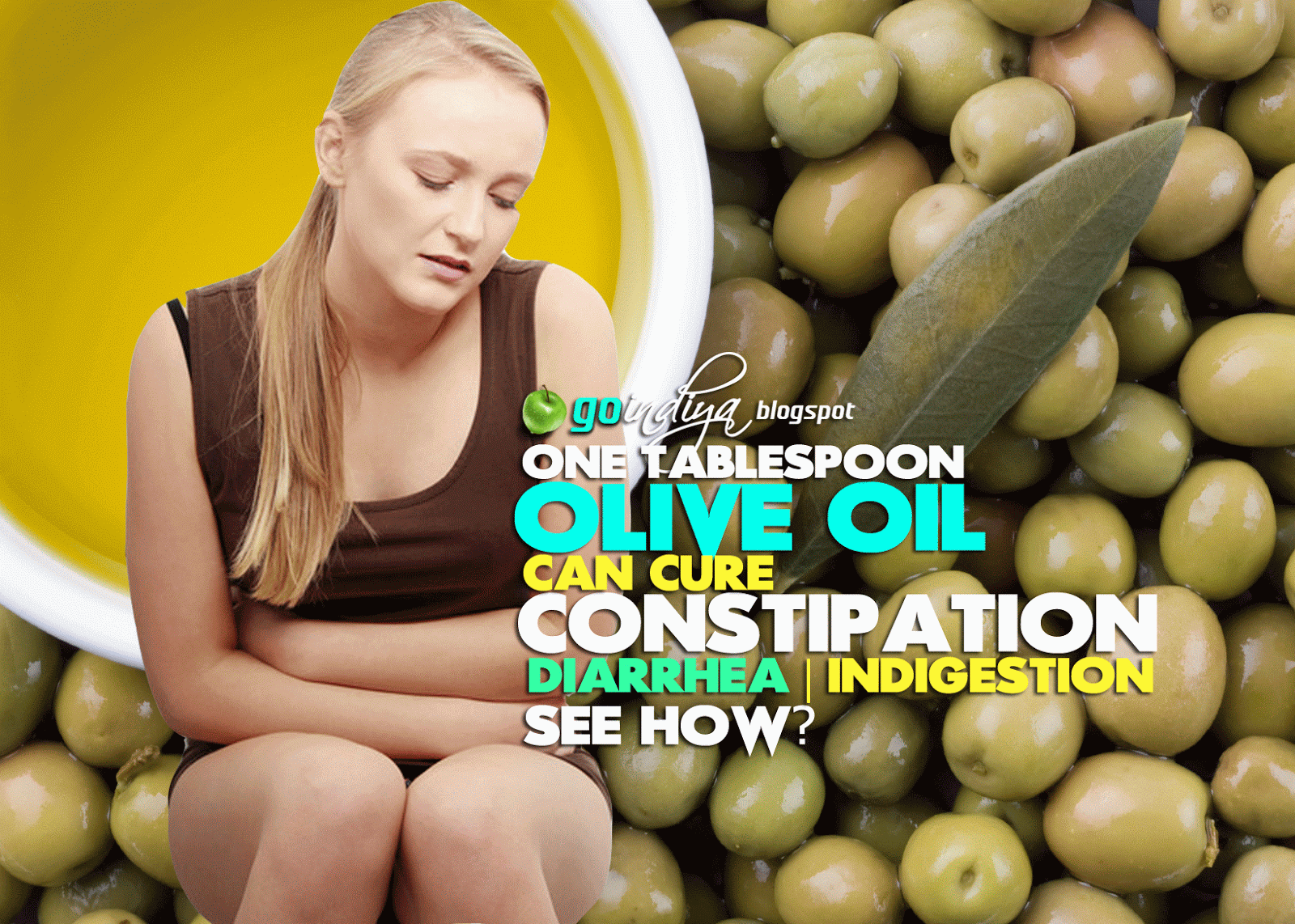
Olive Oil for Constipation & Indigestion. One Tablespoon Can Do Wonders.


Olive oil

Olive oil is known as much easier and natural solution for constipation in all age groups. Olive oil can be used as a safe and natural home remedy for alleviating constipation.   

Olive oil is very simple and easy home remedy for constipation. Add olive oil to your daily diet, as it can help to get your body and digestion system moving more efficiently. Olive oil also helps relieve gas and other digestive troubles.


Olive oil on empty stomach

Consume 1-2 teaspoon of extra virgin olive oil in the morning on an empty stomach. Do not drink water after consumption of olive oil at least for 1 hour. This helps to alleviate constipation.


Olive oil and Lemon juice

Consume 1 tablespoon of olive oil 2-3 times a day and also consume 1 tablespoon of fresh lemon juice after olive oil. For infant and kids feed ½ -1 teaspoon of olive oil and ½ -2 teaspoon of fresh lemon juice with 1 teaspoon of honey. This combination is very useful and tested for all age groups.


Olive oil with Orange juice

Add 2 tablespoon of olive oil or extra virgin olive oil in glass of fresh orange juice. Drink this juice in the morning, especially, on an empty stomach. For infant and small kids add ½ - 2 teaspoon of olive oil in ½ -2 cup of fresh orange juice. You can drink your favorite fruit juice instead of orange juice.


Olive oil with Curd/yogurt

Add 1-2 tablespoon of olive oil in cup of curd and consume in the morning or 3 times a day.


Olive oil with Banana

Make banana shake (1 glass) and add 1-2 tablespoon of olive oil to it, also add 1 tablespoon of honey in it, and consume it. Do this 2-3 times a day. Or spread 1-2 tablespoon of olive oil on your fruit salad or vegetable salad.


Olive oil & Pineapple 

Cut bowl of pineapple pieces and spread 1 tablespoon of extra virgin olive oil and half teaspoon of black pepper salt on it. Eat this to get rid of indigestion and constipation in few hours. You can eat one more bowl of above mixture.
GOOGLE ADS


18 Surprising Benefits of Olive oil for Skin Care


Olive oil contains antioxidants, Vitamin A and E which work as a moisturizer, cleanser, and natural protector of our skin.  Vitamin E is very useful in the anti-aging treatment because it helps restore our skin elasticity & firmness. Other antioxidants like polyhenols, hydroxytyrosol and phytosterols neutralizes the free radicals that cause skin damage & premature aging. 

Olive oil enters deeply into the skin without clogging the pores.  It moisturizes our skin thoroughly and can be used as a natural home remedy for skin condition such as psoriasis and eczema which cause patches on the skin.  Many women use olive oil to get rid of stretch mark after pregnancy and many others apply it to treat blemishes which appear on the skin.


1. Ideal natural moisturizer

The chemical structure of olive oil is closer to that of the natural oils of the skin than any other oil occurring in nature. Hence Olive Oil acts as the ideal natural moisturizer especially for dry and dull skin. You can apply it to moisturize your extremely dry skin like knees and elbows.


2. Regenerate skin tissue

Olive oil is able to help regenerate skin tissue. Thus, regular massage with olive oil makes skin soft, firm, smooth, and toned.


3. Skin massage

Mix together water and olive oil in equal quantities by shaking vigorously in a jar with a tight lid. Use this mixture to massage your skin. Wash off with tepid water.


4. Olive oil with egg yolk

Another amazing face mask to moisturize skin with olive oil can be prepared by blending one tablespoon of honey, with one tablespoon of olive oil and one egg yolk. Blend them all together and apply on your clean face. Leave it for 20-30 minutes and then wash it off with lukewarm water. This face mask moisturizes the skin and helps in maintaining the natural skin tone.


5. Skin rejuvenation

Make a smooth paste using 1 tablespoon olive oil and 1 tablespoon avocado paste and apply it on your face for 20-30 minutes and then rinse it off with lukewarm water. This mask is very helpful for skin rejuvenation.


6. Overnight moisturizer

Virgin olive oil can be used as a moisturizer for people with extremely dry skin. Massage a little olive oil on your face before bedtime and allow it to soak through your skin overnight. In the morning, you will wake up to find your skin feeling soft and supple.


7. Sunburns

Since olive oil has regenerative powers, the process of healing of skin is stimulated. Olive oil soothes and heals irritations of the skin. It also helps treat sunburns due to its regenerative properly. Apply olive oil directly to the affected area.


8. Repairs skin damage

Olive oil has high concentrations of healthy fat and vitamin E, which is a phenolic antioxidant. It also contains squalene and oleic acid. The presence of these substances in olive oil helps fight free radicals in the body and repairs skin damage due to sun exposure. They also lower the risk of developing skin cancer since they inhibit the growth of tumor cells.


9. Prevents and lightens stretch marks

 
Not only does olive oil have the power to help skin cells regenerate, it increases the elasticity of skin as well. This prevents the formation of stretch marks and lightens the existing stretch marks. Massage your skin with hot olive oil approximately three times a week to notice visible changes.

GOOGLE AD


How to Identify Genuine Olive Oil - 7 Best Shopping & Storage Tips


Do you want to change your current cooking oil to olive oil? Read on to find out how you can choose the correct grade of olive oil to maintain good health. Despite the recent hype over olive oil, it is not a new product; it has been in use for centuries and its healing properties were well-known. 


Olive oil is also used for perform rituals and other holy purposes by certain religious sects. By replacing your present cooking medium with olive oil, you can visibly see a change in your well-being.


1. Cold-pressed

When you read the label of the olive oil brand, look for the phrase “cold-pressed.” This means that heat has not been used to extract the olive oil during crushing, thus avoiding the dangers of degradation of the oil into harmful constituents, and increase in impurities.


2. Heat or chemical free

The best and the cleanest way to obtain oil from olives is the mechanical method, without the use of heat or chemicals.


3. Flavor of the olive oil

It is a common mistake to think that green olive oils are better in terms of taste than yellow olive oils. In fact, the color of the olive oil has no bearing on its flavor or quality. The taste of the olive oil is the best indicator of its quality. Lightly-colored olive oil can be of superior quality as well.


4. Light or diet olive oil

There is no such as “light” or “diet” olive oil. Lightly-colored olive oil is not a low-calorie variant. Olive oils labeled “light” have most probably been treated with chemicals to suppress its smell and taste, and alter its acidity level and color.


5. Dark glass protects the olive oil

Olive oil that comes packaged in a clear container or a plastic bottle should not be purchased. Containers made of tin, ceramic, or dark glass protect the olive oil from light and prolong its shelf life, while retaining its quality.


6. Harvesting date

Discard olive oil that has been lying around for a year or so since it has reached the end of its shelf life. Ethical companies include the date of harvesting on the labels of their olive oils. Sometime, however, the date on the label does not indicate the harvesting date. Instead, it shows the date of bottling. It is useful to remember that the harvesting time for olives is between October (in warm places) and March (in cold places).


7. Color of the olive oil

The difference in the color of olive oil occurs due to the varying concentrations of chlorophyll present in the olive when they are harvested. Olive oil can be light straw, dark green, or yellow-gold in color. The color of the oil does not affect its quality. Instead, the procedures used to manufacture the oil and store it have the power to harm it.
GOOGLE AD


8 Most Commonly Asked Questions about Olive Oil


1. Can other types of oil be used instead of extra-virgin olive oil?

Yes, other types of oil can be used. But, it is not advised to use them unless certain recipes require other oils, such as peanut oil or sesame oil. 

A good chef, experienced in Mediterranean cuisine, will recommend olive oil since it has the best taste and is generally fault-less. 

As it is rich in antioxidants and monounsaturated fats, it helps avoid heart diseases. Less expensive varieties of olive oil are also available for people who cannot afford the costly grades of oil.


2. What is the proper method of storage of olive oil? After opening, what is the shelf life of the oil?

Unlike wine, olive oil does not mature with age and thus, needs to be consumed quickly. It spoils easily and is delicate oil; hence it has to be stored with care. Olive oil needs to be protected from air, light, and heat. 

It is best stored in a cool and dry place. Olive oil tends to become rancid quickly and the early stages of rancidity cannot be detected by smell. Store the oil in dark, glass containers or in stainless steel jars that will not react with it. Ensure that olive oil is not kept in vessels made of copper, plastic, or iron.


3. Is it true that all extra-virgin olive oils are almost similar?

This is an untrue assumption because the olive fruit used to extract the oil may be of three different categories – delicate, medium, or robust – which has an effect on the quality of the oil. Also, the label on the packaging could be misleading. Unless you apply your own tests, do not believe that the olive oil labeled “extra-virgin olive oil” is indeed, just that.

Lower-quality olive oils such as pomace olive oil or virgin olive oil may be incorrectly labeled as extra-virgin olive oil. In order to recognize extra-virgin olive oil, the following things should be in order – no spoilt smell or taste, and a balanced level of pungency.


4. Can extra-virgin olive oil be safely used for frying?


 1. The answer to this question depends on the food item that is being fried. Usually, extra-virgin olive oil can be safely used for frying. Lower-quality oils are generally treated with chemicals to remove impurities and ensure that the flavor remains neutral. However, the rich flavor of extra-virgin olive oil tends to complement the food item being cooked.

Ensure that the temperature of the oil remains between 360 degrees Fahrenheit to 365 degrees Fahrenheit. On no account should the temperature exceed 380 degrees Fahrenheit. In fact, used olive oil can be filtered and stored for frying another two or three times.

2. Extra-light olive oil is most suitable for bakery products. We recommend Amanda’s olive oil tart crust. For most recipes, a cup of butter can be substituted with ¾ cup of olive oil.


7. Categories of olive oils

Olive oil can be divided into three slabs based on the flavor of the fruit being harvested: delicate, medium or robust. It is unfortunate that manufacturers fail to indicate which slab the product belongs to, especially in the wake of the fact that the intensity of the olive fruits changes every year. It would help if the labels declared the type of olive fruit used to manufacture the oil.

1. Delicate olive oil is extracted from arbequina, sevillano, leccino, and taggiasca types of fruit. It is best suited for light garnishing of food items such as fish.

2. Medium olive oil is extracted from mission, manzanillo, and ascolana types of fruit. It is suitable for grilled vegetables, salad dressings, and poultry.

3. Robust olive oil can be extracted from picholine, arbosana, and frantoio types of fruit. It is suitable for steak, in combination with lemon juice.


6. Why is there so much hype over unfiltered olive oil?

Unfiltered olive oil has a certain advantage over filtered olive oil, in that it contains more polyphenols or antioxidants, and keeps for longer. But, it looks cloudy. However, you can use whichever olive oil you prefer.


8. Are cooked olive oil and uncooked olive oil vastly different?

Uncooked olive oil has purer and richer taste and is better for your health than cooked olive oil. When the cooking begins, at the smoking stage, olive oil begins to eat itself up by burning. It is recommended that only the necessary amount of oil be used for cooking, and the rest be poured over the food directly, as garnishing, from the packaged container.
GOOGLE AD


Olive Oil Magical Benefits You Never Knew - Olive Oil for Health


Everyone knows olive oil is good for health, tasty and it is easy to use. But, to obtain the most benefits, there is more you should know about olive oil. Extra virgin olive oil is reasonably nutritious. It contains modest amounts of Vitamins E and Vitamins K and lots of beneficial fatty acids. But where extra-virgin olive oil really excellent is in its rich content of antioxidants.

Few people have criticized olive oil for containing a high Omega 6 to Omega 3 ratio (10:1), but the overall amount of polyunsaturated fats is still relatively small, so this should not be an issue.

All these nutritious substances are biologically active and many of them can help fight severe diseases. Some of the major antioxidants are the anti inflammatory oleocanthal and oleuropein, this substance protects LDL cholesterols from oxidation.


1. Arteries can be made more flexible

Take two tablespoons of olive oil every day to strengthen your heart and avoid strokes and heart attack.


2. Can be eaten

Olive oil is well known for its unique flavor and taste and it can be taken in different ways to get the benefits of olives or the oil. The consumption of olive oil promotes digestion and assimilation of nutrients and essential fat-soluble vitamins. Olive oil can be used to cook in different ways, such as sautéing, marinating, in bread dip, or stir frying. It does not penetrate food and only coats it. Hence, when cooked in olive oil, food is less oily than that cooked in other oils. 

Olive oil does not contain cholesterol, sodium, or carbohydrates.


3. Blood pressure

Blood pressure can be improved by complementing the treatment for high blood pressure with a small amount of extra-virgin olive oil in one’s diet every day. Consumption of olive leaf extract also lowers blood pressure.


4. Reduces your appetite

Eating food cooked in olive oil makes you feel full for longer. Thus, you tend to consume less food and crave for sugar less frequently.


5. Diabetes

Olive oil has chemicals that assist in lowering the levels of blood sugar. Its mode of action is similar to insulin, once it is digested in the patient’s body.


6. Cholesterol

In order to reduce total cholesterol levels, olive oil brands such as Figaro olive oil and SoulFlower olive oil should be made a part of one’s diet instead of saturated fat. Olive oil is a part of the Mediterranean diet and is considered to be good for the heart. It promotes metabolism and tones the digestive system. Thus, one can lose weight easily.

GOOGLE AD